

Look back throughout human history, and men have typically ruled. Or at least, that’s what the history books tell us.
But in reality, throughout time, there has always been some form of femdom or female power in society, whether it was from the way our mothers and sisters raise us or the way men simply need women to procreate.
Either way, female dominance in culture has been a thorny issue, which has led “femdom” to become a cultural, symbolic, and sometimes even a sexualized topic of conversation.
(If you’re new to the concept of femdom and want to understand its foundations before exploring its cultural meaning, check out our guide The Ultimate Beginner’s Guide to Femdom: Understanding Dominance and Submission.)
In the following article, we explore various perceptions about femdom across time, religion, and culture, and the way that female power continues to shape the world in which we live.
Cultural and Social Views on Femdom: How Female Power is Perceived Across Different Societies
Understanding Cultural and Social Views on Femdom
When we refer to cultural and social views on femdom, we’re referring to the different ways society interprets the idea of female authority.
Throughout human history, female dominance or femdom has almost always been shaped by outside forces, such as religion, social norms, and traditions, which have often defined female strength to be inferior to masculine power.
However, female authority isn’t always seen as less.
For example, there are many Asian and African cultures that celebrate female power for its divine wisdom and the way women rule through nurturing leadership, not just brute force. In these cultures, female power in society is seen more as a symbol of empowerment and emotional stability, and not just as a loss of masculine control.

But as we explore below, the symbolic meanings of female strength will vary from one culture to the next. So what may be seen as a good thing in one culture is seen as something taboo in another.
The Historical and Cultural Roots of Female Dominance
Ancient Female Archetypes and Myths
While some cultures respect or even revere female power, viewing it as something sacred, others believe it to be disruptive to traditional gender expectations, which is particularly true of Western civilization.
However, when it comes to female authority in traditional vs modern societies, things weren’t always as they are now.
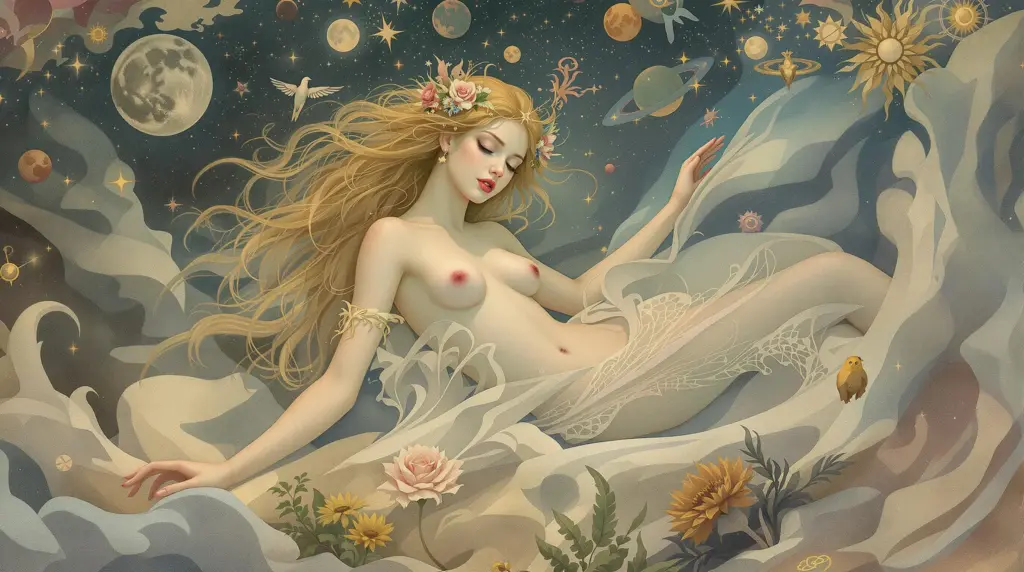
Thousands of years ago, ancient cultures already had unique perceptions about female power, which is why you’ll see so many female archetypes in mythology.
The Egyptian goddess Isis was known for her strength and power, as well as her role as a wife and mother. The Greek goddess Athena was revered for her wisdom and knowledge of warfare. And Kali, the Hindu goddess of time, death, and change, is seen as a symbol of both destruction and womanly power.
The Shifts Through Time
It almost seems as if, throughout time, there’s been a constant tug-of-war between male and female powers, proving that it takes both men and women to rule a world.
Ancient cultures often revered femininity. But then males dominated the scene throughout the middle-ages.
Then, more recently, there’s been another rise in female power, spearheaded by the influence of feminism on culture in the 1960s and 70s, where gender equality and empowerment became the main topic of conversation once again.
Media and Society: Shaping the Image of Female Power
The Dual Role of Modern Media
Historically, society’s rulers had the final say on whether or not femininity was something strong or something weak. But more recently in human history, it’s been the media, books and films that empowered and stereotyped the way we perceive female power.
If you think about it, the role of the media in shaping female power has had both a positive and a negative influence on modern femdom.
Positive and Negative Impacts
There’s no doubt that modern media has provided educational benefits, helping more and more people understand that women are not weak, and that they can and do play an integral role in the world.
Undoubtedly, that has been a good thing for most cultures around the world.
But it’s also because of modern media, films, literature and the internet that those who do not want to see women in power can find their audiences by sharing content that shines a negative light on female power in society.
It’s truly unfortunate how today, social media accounts with hundreds of thousands or even millions of followers can distort gender and power dynamics around the world.
A single viral post can erase decades of female empowerment, nudging humanity back into the dark ages where women were seen as nothing more than a means to an end.
However, as we believe, it’s a balance in representation between male and female forces that supports social equality. This balance provides a more realistic model of human, not solely gender-based, empowerment, which is positive for both men and women everywhere in the world.
Cultural Differences in Viewing Female Power
How Traditions and Beliefs Shape Femdom
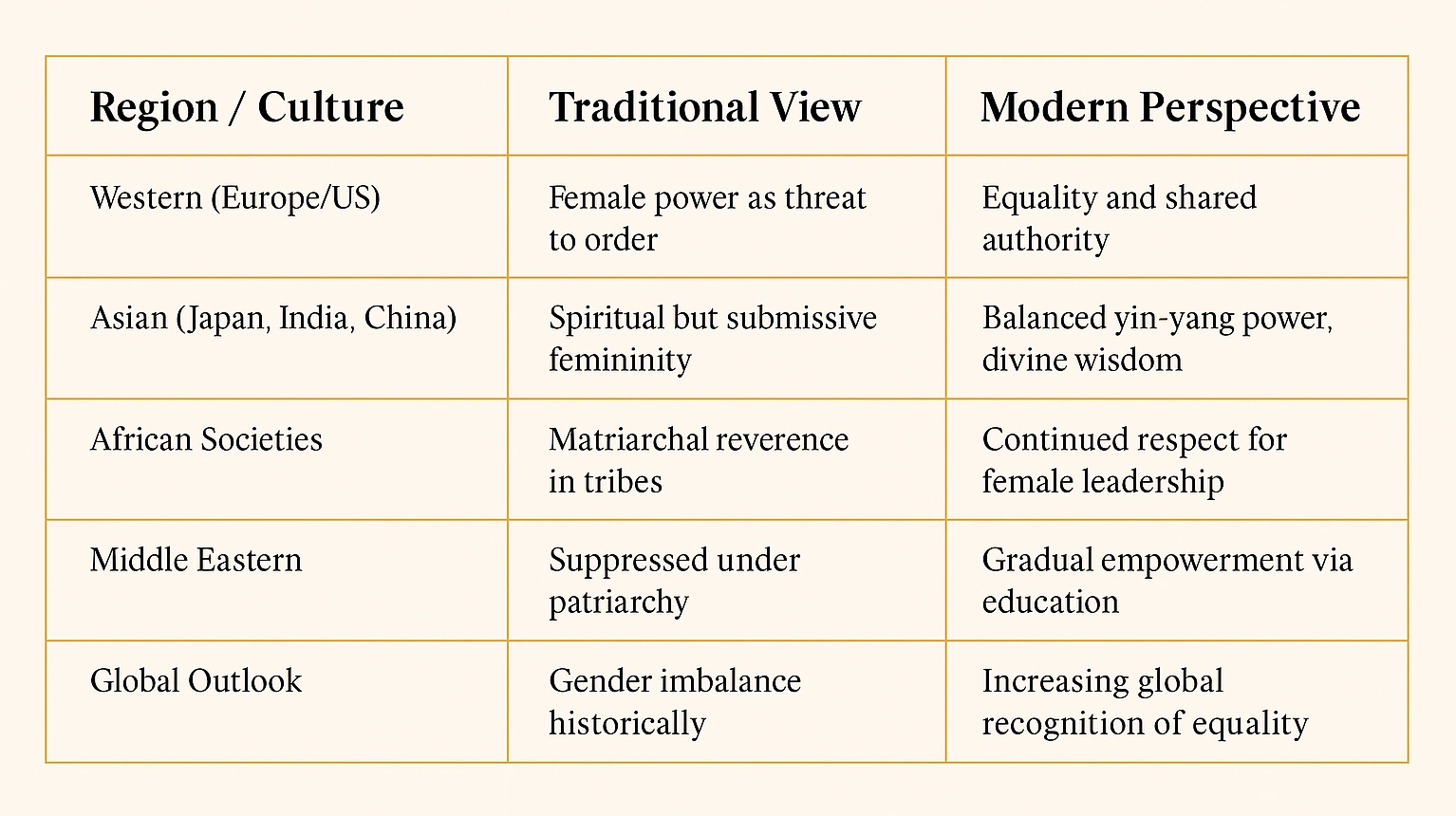
The way different cultures view female dominance has obviously changed throughout time. And how societies view female dominance also changes from one region to the next due to factors like religion, economy, and traditional norms.
But one thing that has always remained the same: there have always been different cultural perceptions of female authority.
For every society that has revered womanhood, there has been another that has put femininity down as an inferior force. Yet for every culture that has tried to keep women down, there’s been an uprising of feminism to show that women are not as weak as they’ve been made out to be.
It’s been a constant battle between male and female forces for as long as history can remember. And we doubt that the battle will end any time soon.
A Global Shift Toward Empowerment
However, on a more positive note, female empowerment across cultures is on the rise.
Globally, femininity is no longer seen as something negative. It’s seen increasingly as something that supports and complements male power, not something that threatens it.
There’s no denying that the shear power and brute force of man has been needed throughout history.
But today, power is no longer just about physical strength. It’s being redefined as awareness, balance and mutual respect, a cross-cultural understanding that women are just as important as men have ever been.
Academic and Cultural Perspectives
Research on Gender and Authority
Whether we’re talking about ancient cultures or modern Western civilizations, gender and power dynamics have become an incredibly important topic for academic research in sociology and gender studies.
For instance, in 2019, the Journal of Gender Studies published a report that found a link between equality levels in society and the acceptance of female authority.
In other words, when a culture sees women as equal to men, it’s more likely to accept the role of female leadership in the workplace. Conversely, this also means that societies that don’t view women as equal do not accept female leadership quite so easily.
This type of gender gap is clearly nothing new. But it goes to show us that cultural analysis of gender roles is an essential piece of the puzzle. And that, only by understanding female and male dominance throughout history can we learn to better rule modern societies and thrive as a global civilization.
Global Understanding of Female Power
The Role of Globalization and Media
As we mentioned, the media has been both a positive and negative force when it comes to female empowerment.
But if we had to explain how globalization changes gender perceptions, we’d have to say it’s been because of media attention (news, books, movies, etc) and the way that education continues to teach the importance of women in society.
In many cultures, modern perspectives on gender and dominance are still quite rigid.
But by bringing modern news, books, and movies to these outdated societies, we can gradually wear away at the rigidity of male dominance, and show the world that strong leadership can indeed be built on softness and confidence, not only upon control.
We state this with certainty because most societies around the world increasingly share a positive global perspective on female empowerment.
To ensure our future, humanity must continue to forge ahead and avoid returning to the dark ages. And we can do precisely that by favoring collaboration, equality and shared authority between both male and female powers, not by hampering it.
Conclusion
Cultural and social views on femdom may vary, but we are as a species moving gradually toward unity in equality.
Yes, there are still many enduring cultural attitudes toward women in power. And it may still be years, even decades before they’re gone.
But that only reinforces the need for continued dialogue, for continued education, and for the media’s continued attention to important issues, such as diversity and gender equality.